168,100.1 Router Login and Network Configuration Guide
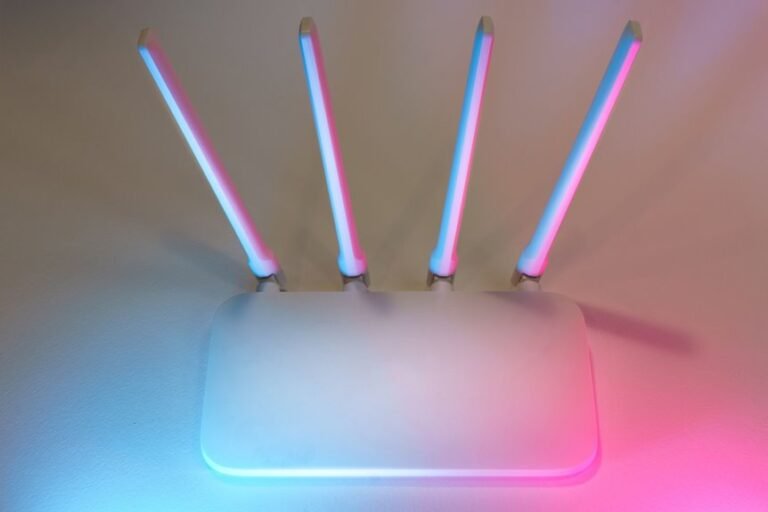
The 168,100.1 Router Login and Network Configuration Guide outlines steps to access the admin page, verify credentials, and confirm device connectivity. It then presents essential settings, Wi-Fi optimization, and diagnostic procedures in a concise, technical manner. The document emphasizes stable addressing, security options, and parental controls while noting potential pitfalls and update considerations. It leaves a clear path for applying configurations but stops short of final validation, inviting further exploration of each configuration area.
How to Log In to 168,100.1 Router Admin Page
To access the router’s admin page, a user must connect a device to the router’s network and enter the device’s gateway IP address into a web browser.
The login page presents credentials, granting admin access upon validation.
Once authenticated, check firmware updates, enable parental controls, and configure security options.
Access remains described to empower users while maintaining precise, platform-agnostic steps.
Essential Network Settings You Should Understand
Understanding essential network settings is foundational for stable, secure, and efficient router operation. The section outlines core configurations, emphasizing supported network protocols and device compatibility to prevent mismatches. It emphasizes consistent addressing schemes, DHCP scope management, and firewall basics. By clarifying options, it aids deliberate changes without ambiguity, supporting autonomy while safeguarding interoperability across diverse hardware and services.
Optimizing Wi-Fi: Frequency, Security, and Coverage
Optimizing Wi‑Fi involves selecting the appropriate frequency band, implementing robust security, and ensuring uniform coverage across the intended area. The approach minimizes wireless interference while maximizing throughput. Attention to channel selection, transmit power, and placement supports stable signal propagation, consistent roaming, and predictable performance. Documentation emphasizes objective metrics, baseline configurations, and repeatable validation for scalable, free-form network design.
Troubleshooting Common 168,100.1 Router Issues
Common 168,100.1 router issues are diagnosed by isolating hardware, firmware, and configuration factors that affect connectivity and performance.
Troubleshooting focuses on reproducible symptoms, logs, and baseline metrics, ensuring fast isolation of anomalies.
Network security and device prioritization govern policy conflicts, QoS, and firewall behavior, guiding corrective steps.
Solutions emphasize stable firmware, verified cabling, and robust access control for reliable operation.
Frequently Asked Questions
What Is the Default Login URL for 168,100.1 Router?
The default login URL is http://168.100.1.1. It allows access for configuration and firmware update management; users should verify network settings first. The guidance emphasizes secure access, keeping firmware updated, and avoiding unnecessary exposure to vulnerabilities.
Can I Update the Router’s Firmware Manually?
Yes, he can perform a manual upgrade, though the device’s pride may protest. The guide emphasizes caution: manual upgrade, then firmware rollback if issues arise, ensuring configuration remains intact while preserving user autonomy and system stability.
How Do I Reset the Router to Factory Settings?
The reset procedure restores factory defaults. To reset: locate the reset button, press and hold for 10–15 seconds, release, and allow reboot. This clears custom settings and returns the device to original configuration state.
Do I Need a Static IP for Gaming Qos?
A static IP is not strictly required for gaming QoS; it can help predict traffic, but modern QoS works with dynamic addresses. The system optimizes prioritization based on rules, not the mere presence of a static IP.
Is NAS or USB Sharing Supported on This Model?
The model typically supports nas sharing and usb sharing, enabling network-accessible storage and USB-connected devices. In this implementation, nas sharing and usb sharing operate with standard SMB/AFP/DLNA access, emphasizing openness for decentralized, freedom-loving network configurations.
Conclusion
In summary, the 168,100.1 router guide equips administrators to securely log in, verify firmware, and tune essential settings—from DHCP scope to firewall rules. By methodically reviewing status, enabling parental controls, and optimizing Wi‑Fi factors, networks gain reliability and protection. The process acts as a precise compass, guiding administrators through potential pitfalls toward stable performance. Like a well‑oiled machine, a correctly configured router delivers consistent connectivity and peace of mind.